






For most buyers who need repeatable site accommodation, a knock-down container house is the practical choice over a modified sea container. It ships flat, stacks densely, and assembles with bolted panels rather than welding. The trade-off is that the building is only as good as its panel fit and the supplier's documentation. Confirm the panel joint system, insulation, and foundation method before you commit to a volume order.
- What Is a Knock Down is suitable for food packaging, wrapping, and commercial display needs.
- What Is a Knock Down options support custom size, printing, packing, and brand presentation.
- knock down container house assembly helps buyers compare material performance, finish, and application fit.
- flat pack container house buying is available for wholesale supply, OEM projects, and repeat orders.
- What Is a Knock Down supports restaurants, factories, distributors, and private label packaging buyers.
What the Product Actually Is, and Where It Stops Making Sense
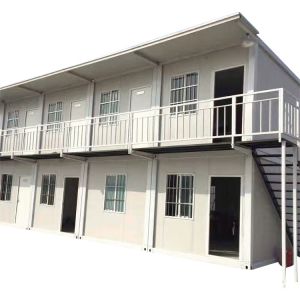
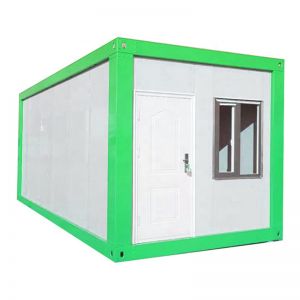
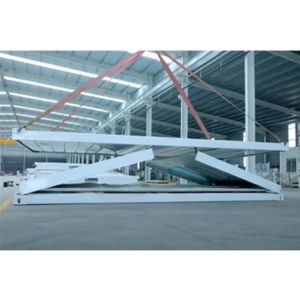
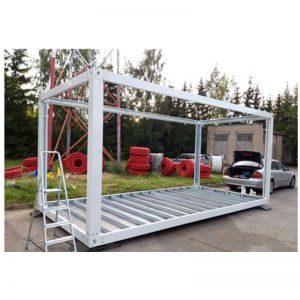
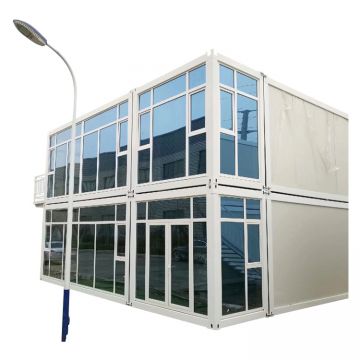
A knock-down container house is a modular building supplied as flat-packed wall, roof, and floor panels plus corner posts and connecting hardware. It is assembled on site into a room or a linked block. It is not a shipping container cut and fitted out; the structure is purpose-made for disassembly and re-erection.
Related products and categories: Container House · Flat Pack Container House Installed for Canada Client · 20ft A-Frame Container House Frame – No Crane Needed for Installation · 20ft Flat Pack Container Frame – China Manufacturer with CE and ISO.

This format suits temporary offices, site canteens, worker accommodation, and storage rooms where the site has a few days of assembly time and a level base. It makes less sense where the building must move weekly, where the ground cannot be prepared, or where local rules require a permanent structure with fixed foundations. Those cases usually point to a different building system, not a different supplier.
The Specification That Decides Whether Assembly Goes Smoothly
Panel joint design is the first thing to check. Bolted or cam-lock joints are faster to assemble and easier to take apart than systems that rely on site sealing and adhesive. Ask for the joint detail drawing and the recommended torque or fixing sequence, because a joint that is over-tightened or assembled out of order can distort the frame and leave gaps.

Insulation choice follows the climate and the intended use. Mineral wool, EPS, and PU panels behave differently for fire response, moisture, and weight. A heavier panel can need more lifting help on site. If the building will be used in a hot or cold climate, ask how the wall, roof, and floor insulation are specified together, not as separate items.
Floor and foundation method is the third control point. Most flat-pack systems need a level, continuous base such as concrete strip, piers, or a prepared hardstanding. Confirm the allowable tolerance and whether the supplier expects the buyer to provide the base or supplies adjustable feet.

Comparing the Two Common Formats
| Point | Knock-down container house | Modified sea container |
|---|---|---|
| Shipping form | Flat panels, dense stacking | Full box, one unit per slot |
| On-site work | Bolted assembly | Mostly fit-out after delivery |
| Relocation | Can be disassembled and moved | Moved as a whole box |
| Main check | Panel fit and joint sequence | Structural condition and cut-outs |
The table is a starting point, not a verdict. A knock-down unit wins on freight and repeat orders; a modified container wins when the buyer wants a ready shell and does not plan to move it often.
Buyer Checks before the Order Is Placed
- Request the assembly drawing and a step sequence, not just a product photo.
- Ask which tools and how many people the supplier assumes for one unit.
- Confirm what is included: panels, posts, fixings, sealant, doors, windows, electrical provision.
- Ask how panels are packed and whether corner protection is used, since flat panels are easily dented in transit.
- Confirm the base tolerance and who supplies it.
- Ask for the loading plan and how many units fit in a container.
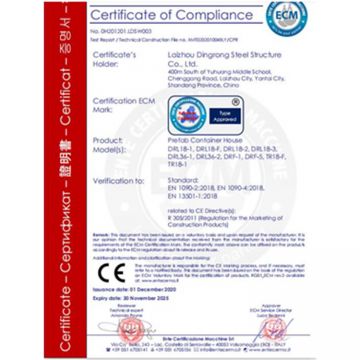
Where certification, fire rating, or structural approval is required, ask for the specific document that applies to the destination market and treat a verbal assurance as unverified until the paper is provided.

Cost Drivers and Failure Risks
Freight efficiency is the main cost advantage, because flat panels use container space better than assembled boxes. The cost moves with panel thickness, insulation type, door and window count, and the amount of electrical or plumbing work done at the factory. Site cost moves with base preparation and the labour needed to assemble and seal the unit.
The common failure is not the panel itself but the joint. Poor sealing, missing fixings, or assembly on an uneven base leads to water ingress, draughts, and doors that no longer close squarely. A second risk is documentation: a unit that cannot be shown to meet the buyer's local requirement may be unusable on site regardless of build quality.

Buyer FAQ
Can One Unit Be Assembled without Heavy Equipment?
Many flat-pack systems are designed for small crews and hand tools, but panel weight and roof height decide this. Ask the supplier for the panel weights and the lifting method they recommend for your site.
Is a Knock-down Container House Reusable after Disassembly?
Reuse depends on the joint system and how carefully the unit was taken apart. Bolted systems are generally more reusable than sealed ones. Confirm the supplier's expected number of assembly cycles in writing if relocation is part of your plan.
Before signing, ask the supplier to walk you through one full assembly sequence on paper, from base check to final seal, and to list every item the buyer must supply. That single document will tell you more about fit and risk than any brochure specification.
Key product terms include What Is a Knock Down Container House Assembly Explained, knock down container house assembly, flat pack container house buying guide for buyers comparing materials, applications, and supplier options.