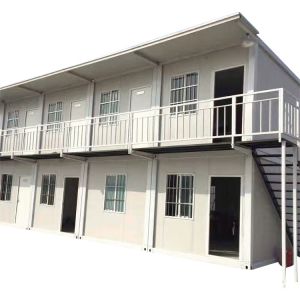
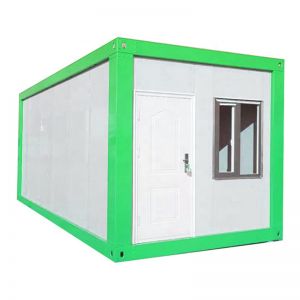





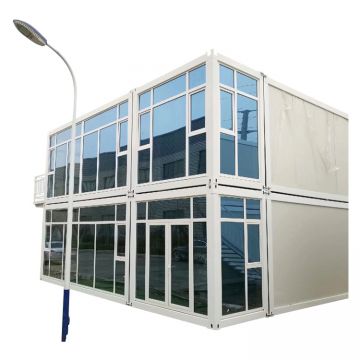


For most overseas buyers running temporary site offices, worker camps, or remote project accommodation, a detachable flat-pack container house is the practical default: it ships knocked down, stacks efficiently in a standard container, and can be reassembled with basic tools and a small crew. It is not the right answer for every site, but for projects where transport cost and redeployment matter more than permanent-build finishes, it usually wins on total landed cost.
- Detachable Container House Cost Effective is suitable for food packaging, wrapping, and commercial display needs.
- Detachable Container House Cost Effective options support custom size, printing, packing, and brand presentation.
- detachable container house cost effective helps buyers compare material performance, finish, and application fit.
- flat pack container house buying is available for wholesale supply, OEM projects, and repeat orders.
- Detachable Container House Cost Effective supports restaurants, factories, distributors, and private label packaging buyers.
Where a Detachable Unit Fits, and Where It Does Not
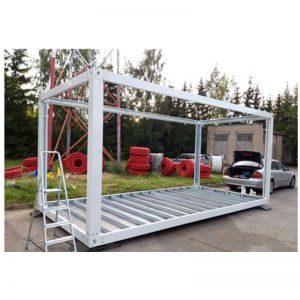
Detachable container houses are built as a set of panels, frames, and fittings that are bolted together on site. That construction logic suits projects with repeated relocation, limited crane access, or long inland transport legs, because the packed volume is far smaller than a fully assembled unit. It is a weaker fit when the building must meet permanent-structure codes, when the site needs heavy integrated MEP systems, or when the client expects architectural finishes that only a conventional build can deliver. Buyers should treat the container house as a relocatable, semi-permanent asset, not a substitute for a code-compliant permanent building.
Related products and categories: detachable container house · Container House · Flat Pack Container House Installed for Canada Client · 20ft A-Frame Container House Frame – No Crane Needed for Installation.

Flat Pack, Folding, and Assembled: What the Choice Really Changes
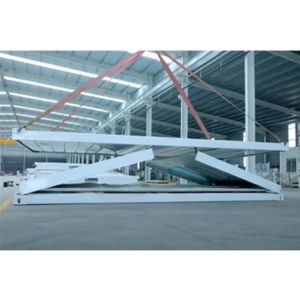
The three common formats differ mainly in how much site labor and freight volume they consume. A flat-pack kit usually gives the lowest shipping volume but the most assembly steps. A folding unit arrives partly assembled and unfolds quickly, which reduces labor but raises the packed height and can limit how many units fit per container. A fully assembled unit is fastest to occupy but the most expensive to move. The trade-off is rarely about quality; it is about which cost you are trying to control.
| Format | Freight volume | Site labor | Best for |
|---|---|---|---|
| Flat pack | Lowest | Highest | Long sea legs, tight budgets |
| Folding | Moderate | Moderate | Fast redeployment |
| Assembled | Highest | Lowest | Urgent occupancy |
Specifications That Decide Fit and Service Life
Frame steel thickness, surface treatment, and panel core material drive both durability and price. Thicker galvanized frames and better coating generally resist corrosion longer in coastal or humid sites, but they add weight and cost. Insulation choice should follow the climate: a panel that performs well in a mild region may underperform in extreme heat or cold. Buyers should ask for the actual steel grade and coating specification in writing rather than accepting a generic description, and should confirm whether the quoted panel thickness refers to the overall panel or the insulation core alone.

Cost Drivers to Price before You Commit
The unit price is only part of the landed cost. Freight volume per unit, port handling, inland trucking, foundation or ground preparation, crane or forklift time, and the labor rate for assembly all move the total. A cheaper kit that packs poorly or needs more skilled labor can end up costing more than a slightly higher-priced folding unit. Ask the supplier for the packed dimensions and weight per unit, then calculate container utilization before comparing quotes.
What to Verify with the Supplier
- Packed dimensions, weight, and units per container for the exact configuration quoted.
- Steel grade, frame thickness, and coating or galvanizing specification.
- Panel construction and insulation type, with the core thickness stated separately.
- Assembly instructions, tool list, and whether supervision or installation is offered.
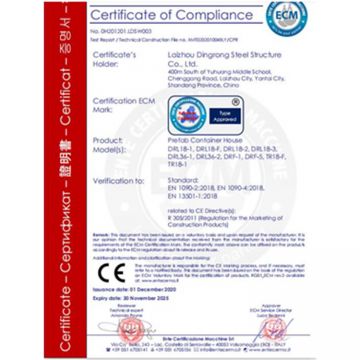
- Available test reports or certificates for the specific model, not a generic company document.
Buyer FAQ
How Many Detachable Container Houses Fit in One Container?
That depends entirely on the packed design and unit size, so there is no universal figure. Ask the supplier for packed dimensions and weight for the exact model, then confirm the count against your chosen container type before booking freight.

Can a Detachable Container House Be Reused on Another Project?
Yes, that is one of its main advantages, provided the panels and fittings are undamaged and the unit is dismantled carefully. Buyers planning relocation should confirm that replacement fasteners and connection parts are available, since reusing a unit depends on those small components as much as on the main panels.
Before placing an order, request a packing drawing and a written specification sheet for the exact model, and compare at least two suppliers on landed cost rather than unit price alone. The specification sheet, not the brochure, is what protects you when the first container arrives on site.

Key product terms include Detachable Container House Cost Effective Modular Solution for Global Construction Projects, detachable container house cost effective modular solution, flat pack container house buying guide for buyers comparing materials, applications, and supplier options.