




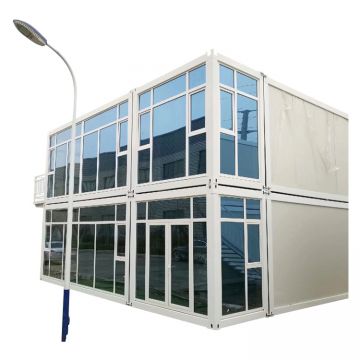


For most export buyers shipping to a single site with limited storage and a need to move units again later, a 100% folding container house is the practical default. It collapses into a flat pack, so you pay for volume rather than empty air, and you can reposition it without a second build. That recommendation holds when your site has a crane or forklift and your supplier can confirm the folded stack height and panel locking method. It does not hold if you need permanent, code-stamped accommodation or if your site cannot handle the folded weight.
- Why Choose a 100 Folding is suitable for food packaging, wrapping, and commercial display needs.
- Why Choose a 100 Folding options support custom size, printing, packing, and brand presentation.
- folding container house export helps buyers compare material performance, finish, and application fit.
- 100 folding container house is available for wholesale supply, OEM projects, and repeat orders.
- Why Choose a 100 Folding supports restaurants, factories, distributors, and private label packaging buyers.
Where a Folding Unit Fits, and Where It Does Not
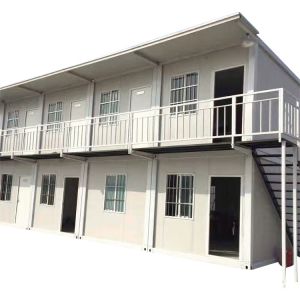
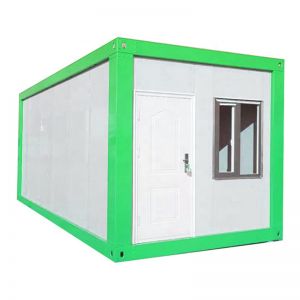
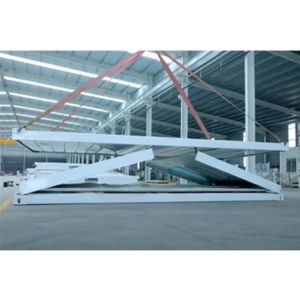
Folding container houses suit temporary offices, site canteens, guard rooms, and worker accommodation that will be relocated. The folding mechanism is the whole point: walls hinge down onto the floor and roof, so a finished unit becomes a compact bundle. That saves container space on the outbound leg and again on the return leg.
Related products and categories: Folding container house · 20ft Office Folding Container House · Prefab 20ft Folding Container House - Good Solution for Construction Site · Prefab Container House Price - Easy to Install Folding Container Home.

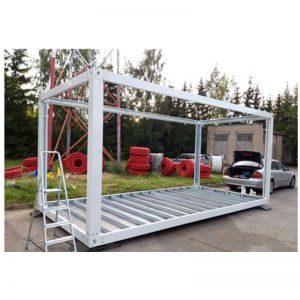
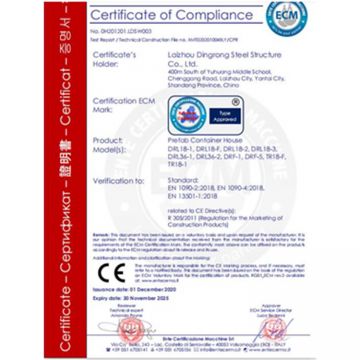
The boundary is permanence. If the building must meet a local structural or fire approval for long-term occupancy, a folding frame may not be the right base. Ask the supplier which standards the unit is built to and whether they can supply documentation for your destination. Do not assume a folding design carries the same approvals as a fixed container structure.
What Actually Controls Fit and Cost
Three specifications drive most of the buying decision. First, the folded dimensions and weight, because they set how many units fit in a shipping container and whether your site equipment can lift them. Second, the panel and frame material, since galvanized steel frames and insulated sandwich panels behave differently in coastal humidity and in cold climates. Third, the locking and sealing detail at the hinge line, which is where water ingress and draughts usually appear first.

Cost drivers follow the same logic. More insulation, thicker panels, and heavier frames raise unit cost but reduce later heating or cooling load. Custom layouts, plumbing, and electrical fit-out add cost and lead time. Shipping cost depends on folded volume, not on the finished floor area, so a compact fold can offset a higher unit price.
| Buyer priority | Spec to confirm | Trade-off |
|---|---|---|
| Lower freight | Folded height and stack count | Thinner panels may reduce insulation |
| Reuse on new sites | Hinge and locking design | More handling steps on each move |
| Climate comfort | Panel insulation and sealing | Higher unit weight and cost |
Supplier Questions Worth Asking before You Order
- What are the exact folded dimensions and weight per unit, and how many fit in a standard container?
- Which materials are used for the frame, panels, and hinge hardware, and how are they protected against corrosion?
- Can you provide a sample panel or a short video of the fold and unfold sequence?
- What is the packing method, and how are panels protected during sea freight?
- Which documents can you supply for my destination market?
A sample panel is often more useful than a brochure. It lets you check panel density, edge sealing, and hardware finish before committing to a full order. If a supplier cannot show the fold sequence or the packed configuration, treat that as a gap to resolve, not a detail to skip.

Failure Risks to Check on Arrival
The common problems are not dramatic. Hinge points can bind if the frame is twisted in transit. Seals can compress unevenly if the folded bundle was stacked too high. Panel edges can be damaged if packing relied on strapping alone. Inspect the first unit before the rest of the stack is unpacked, and photograph any deformation at the hinge line. Confirm with the supplier how replacement panels or hardware are supplied, because a folding unit is only reusable if spare parts remain available.
FAQ
Is a 100% Folding Container House Cheaper Than a Fixed Container House?
Not always on unit price. The saving usually appears in freight and in redeployment, because folded units take less container volume and can be moved again. Compare total landed cost, including lifting equipment at both ends, rather than the unit price alone.
Can I Fold and Unfold the Unit Myself?
It depends on the design and the equipment on site. Ask the supplier for the handling method, the number of people required, and whether a crane or forklift is needed. Do not plan on manual handling unless the supplier confirms it.
Before you place an order, ask for the folded dimensions, a panel sample, and the packing drawing in one package. Those three items tell you more about export readiness than any specification sheet, and they give you a clear basis for comparing suppliers on the same terms.
Key product terms include Why Choose a 100 Folding Container House for Export, folding container house export, 100 folding container house for buyers comparing materials, applications, and supplier options.