



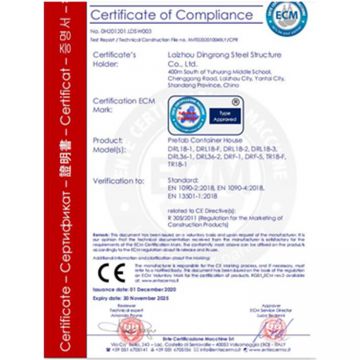



For most first-time importers, the safest starting point is a supplier that can show you the actual production line behind the carport frame and roof — usually a manufacturer or a factory with in-house fabrication — rather than a trading company that only resells. That is a qualified recommendation, not a rule. A well-run trading company can be the better choice when you need mixed materials, small trial volumes, or help coordinating several components. The decision should rest on what you can verify, not on the label a supplier puts on its profile.
- How to Choose a Carport is suitable for food packaging, wrapping, and commercial display needs.
- How to Choose a Carport options support custom size, printing, packing, and brand presentation.
- Factory or Trading Company helps buyers compare material performance, finish, and application fit.
- how to choose a carport is available for wholesale supply, OEM projects, and repeat orders.
- How to Choose a Carport supports restaurants, factories, distributors, and private label packaging buyers.
What Each Supplier Type Actually Does
A manufacturer owns or directly controls the equipment that cuts, bends, welds, and coats the steel or aluminium structure. A factory may be a single production site that specializes in one process, such as tube forming or powder coating, and may still outsource assembly. A trading company handles sourcing, documentation, and communication but typically does not run the machines. None of these labels guarantees quality. What matters is whether the party you pay can answer for the material, the coating, and the packing.
Ask each candidate to describe, step by step, where the frame is formed, where it is coated, and where it is packed. A supplier that hesitates on any of those steps is telling you something useful.

Specifications That Control Fit and Durability
Carports fail or disappoint for predictable reasons: undersized sections, thin coating, weak connections, and poor anchoring for the intended ground. Before comparing prices, fix the specification you need and make every supplier quote against the same one.
- Structure and section sizes: confirm the profile dimensions and wall thickness of posts, beams, and rafters, and whether they are stated as nominal or actual.
- Material grade: ask which steel or aluminium grade is used and request the mill or material certificate.
- Surface protection: clarify the coating type and target thickness, and how cut edges and welded joints are treated.
- Roof and fixing: confirm roof sheet or panel type, overlap, and the fasteners and seals supplied.
- Anchoring and foundations: state your ground condition (concrete, soil, paving) and ask what base plates and anchor options the supplier provides.
- Wind and snow assumptions: give the supplier your site conditions and ask them to confirm, in writing, the design basis they are quoting to.
If a supplier cannot put these points in a written specification, the price comparison is meaningless.

Comparing the Three Options
| Type | Strength | Check before ordering |
|---|---|---|
| Manufacturer | Direct control of fabrication and coating | Factory audit, in-house process list, capacity |
| Factory | Focused on one process, often flexible on custom sizes | Which steps are outsourced, who assembles |
| Trading company | Coordination, mixed sourcing, documentation | Named production partner and inspection access |
The table is a starting frame, not a ranking. A trading company with a transparent, audited production partner can outperform a factory that hides its subcontracting.
Cost Drivers Worth Understanding
Price differences usually trace back to section size and wall thickness, coating specification, roof material, connection design, and packing method. Custom dimensions and colours add cost through setup and coating runs. Very low quotes often reflect thinner sections, lighter coating, or simplified connections — ask the supplier to state exactly what was reduced. Freight and packing are separate drivers: a compact, well-protected pack can lower shipping damage and container cost, so ask how the frame is bundled and how edges are protected.

Verification Steps before You Commit
- Request a written specification and a drawing for your exact size and site conditions.
- Ask for a sample of the coated section or a small component to check finish and thickness claims.
- Confirm who performs quality checks, at which stages, and whether you or a third party can inspect before shipment.
- Ask for the packing plan and loading photos before the container leaves.
- Get the warranty terms and spare-parts list in writing.
Treat a supplier's willingness to support these steps as part of the evaluation. Reluctance to document a process is a risk signal regardless of company size.
Buyer Questions
Is a Trading Company Always Riskier Than a Factory?
No. The risk depends on transparency. Ask a trading company to name its production partner and allow inspection; if it will not, the coordination benefit is not worth the uncertainty.

What Should I Confirm about Coating and Anchoring?
Ask for the coating type and target thickness, how cut edges are treated, and which anchor and base-plate options suit your ground. Have the supplier confirm these in the quotation rather than in conversation.
Before you request quotes, write a one-page specification covering section sizes, material grade, coating, roof, anchoring, and site conditions, then send the same document to every candidate. Suppliers who respond to that document with specifics — and who welcome inspection — are the ones worth a second round.
Key product terms include How to Choose a Carport Supplier in China Manufacturer, Factory or Trading Company, how to choose a carport supplier in China manufacturer factory or trading company for buyers comparing materials, applications, and supplier options.