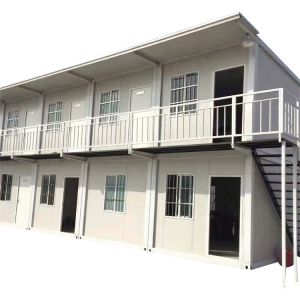
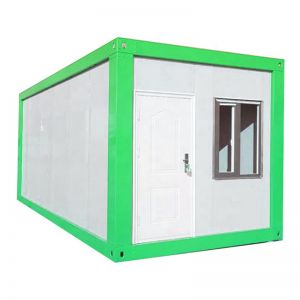





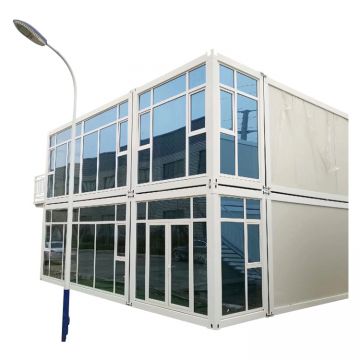


20ft Tiny Living Container House with Kitchen
MOQ: 1 unit
Supplier Capability and Handoff
Choosing a supplier for a prefab outdoor container kitchen requires more than comparing unit prices. The supplier must translate your menu, layout, and utility needs into a buildable specification, then control quality through fabrication, packing, and shipping. This page outlines what to verify before you commit.
Ask the supplier to confirm their experience with foodservice layouts inside container shells. They should provide a drawing that shows equipment positions, utility entry points, drainage, ventilation, and service windows. The drawing must match your menu and service flow. For packaging items, the supplier should confirm capacity, dimensions, material and temperature range, matching lid or accessory, leak and stack testing, and carton quantity and labeling. If any of these are not documented, request a written confirmation before quotation.
Request a sample of food contact surfaces and packaging components. Test with the real food or drink, service temperature, holding time, transport method, and matching lid. Check capacity, rim and lid fit, leakage, deformation, nesting, cleanliness, and carton protection. For the container structure, confirm wall and roof materials, insulation type, and floor finish. Do not accept verbal assurances; ask for material certificates or test reports where available.
Ask how the supplier controls quality at each stage: frame welding, panel installation, utility rough-in, equipment mounting, and final testing. Request an inspection checklist. When comparing quotations, normalize the scope. One quote may include cooking equipment while another excludes it. One may include shipping to port while another quotes ex-works. Use the table below to compare key items.
| Verification Item | What to Confirm |
|---|---|
| Drawing and layout | Signed drawing with equipment, utilities, and dimensions |
| Materials | Food contact surfaces, insulation, floor, wall, and roof |
| Packaging components | Capacity, lid fit, leak resistance, stackability, carton labeling |
| Quality control | Inspection points, test reports, and final check |
| Quotation scope | Included equipment, utilities, shipping terms, and installation |
| Loading and delivery | Packing method, container loading plan, delivery schedule |
| Installation support | Manuals, remote guidance, or on-site support |
| Communication | Response time, language, and change-order process |
| Repeat-order controls | Approved samples, specification freeze, and batch records |
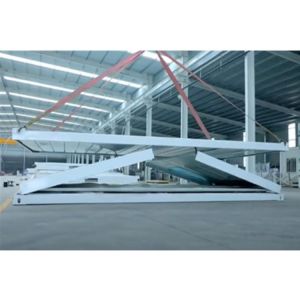
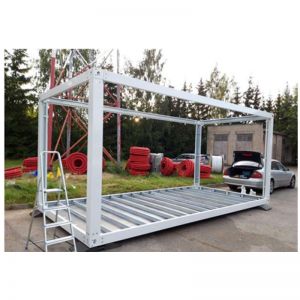
Confirm how the unit will be packed for transport. Container kitchens may ship as a complete unit or as flat-pack components. Ask for a loading plan that shows how the unit and any loose equipment will be secured. Clarify delivery terms and who handles unloading. For installation, request a manual and a remote support plan. If on-site support is needed, define the scope and cost in the quotation.
Establish a single contact for technical questions and a clear change-order process. Keep approved drawings and samples as reference for future orders. For repeat orders, freeze the specification and require batch records for packaging components. This reduces variation in lid fit, leak resistance, and carton labeling. Confirm that the supplier can maintain the same materials and equipment across orders.
This page is based on the current Prefab Outdoor Container Kitchen catalog, which contains 3 matching product records. Representative product titles include:
Review matching catalog products after reading the supplier evaluation above.


Prefab Outdoor Container Kitchen is usually selected by matching layout, dimensions, structural system, insulation, finishes, utilities, and delivery requirements with the final site and operating conditions. This helps buyers compare more than appearance and choose a configuration that fits use, transport, installation, and long-term operation.
For residential, commercial, industrial, hospitality, and temporary building projects, DINGRONG CONTAINER can help adjust dimensions, layout, structural system, insulation, finishes, and utility scope according to the project requirements. Many buyers also review Prefab Kitchen Container, Prefab Container Home, Prefab Container House to narrow the final building configuration.
Compare the available products above, then share layout, dimensions, insulation, finish, utility, quantity, and destination requirements so the quotation can match the actual project scope.
Share the intended application and confirm capacity, material, temperature range, lid fit, leak resistance, stackability, food contact, and carton packing.
Test with the real food or drink, service temperature, holding time, transport method, and matching lid.
Check capacity, rim and lid fit, leakage, deformation, nesting, cleanliness, and carton protection.
Compare the product cards by material, dimensions, construction, customization options, packing requirements, and suitability for the intended application before requesting a quotation.
Select your preferred language and currency. You can update the settings at any time.