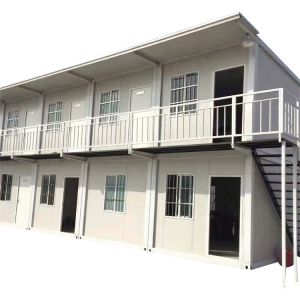
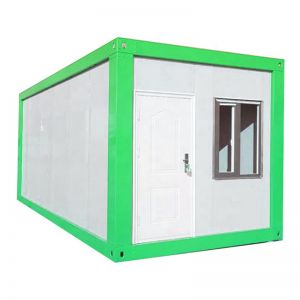

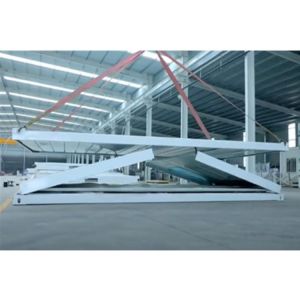

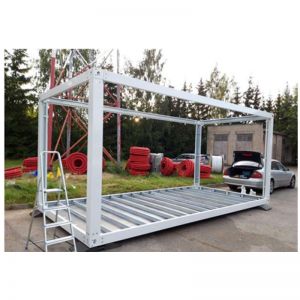



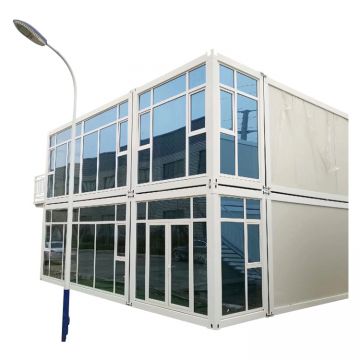


Prefab Portable Flat Office or Living Room Container House
MOQ: 1 unit
Supplier Evaluation
Selecting a supplier for custom prefab container frames requires verifying fabrication capability, drawing control, and quality systems. This page outlines what to confirm before placing an order.
Begin by confirming the supplier's fabrication scope. Ask whether they cut, weld, drill, and finish frames in-house or subcontract. Request a process flow from raw steel to packed frame. For custom prefab container frames, the critical handoff is the drawing package: a dimensioned general arrangement, member sizes, connection details, lifting points, and a bill of materials. Confirm who produces the drawings, what software is used, and how revisions are controlled. A supplier who cannot provide a clear drawing set before production is a risk.
Ask for a sample room or first-article inspection. The sample should demonstrate weld quality, hole positions, surface finish, and fit with the intended panels. Confirm the steel grade and section profile against the drawing. Check corrosion protection: is it paint, galvanizing, or another system? Request the coating specification and dry film thickness. If the frame will receive insulation or linings, confirm that the frame geometry and fixing points match the panel system.
Request the inspection plan. Key checks include dimensional accuracy, squareness, weld integrity, hole alignment, and coating thickness. Ask whether the supplier uses jigs or fixtures to maintain repeatability. For stacked frames, confirm that corner castings or connection plates align across units. If third-party inspection is required, agree on the inspection stage and access. Document acceptance criteria in the purchase order.
Quotations for custom prefab container frames are only comparable when they cover the same scope. Use the table below to normalize offers.
| Item | What to Confirm |
|---|---|
| Drawing scope | Who provides drawings, revision control, and approval cycle |
| Material | Steel grade, section profile, coating system and thickness |
| Fabrication | Cutting, welding, drilling, finishing, and tolerances |
| Inspection | In-house checks, third-party options, and documentation |
| Packing | Protection, stacking, and loading plan |
| Delivery | Incoterm, lead time, and shipping method |
| Support | Installation guidance and spare parts |
Confirm the packing method and loading plan. Frames are often nested or stacked to save space, but this can cause deformation if not braced. Ask for the container loading diagram and whether frames are protected at contact points. Clarify the delivery terms and lead time. For installation, request assembly instructions, torque specifications, and guidance on connecting frames to foundations and to each other. If the supplier offers on-site support, define its scope and cost.
Establish a single point of contact and a defined response time. Keep a record of drawing revisions, inspection reports, and packing lists. For repeat orders, ask the supplier to retain jigs, drawings, and material certificates so that subsequent batches match the first. Confirm how they handle changes in steel supply or coating availability without altering the agreed specification. A supplier with clear documentation and revision control is better positioned to deliver consistent custom prefab container frames.
Review matching catalog products after reading the supplier evaluation above.


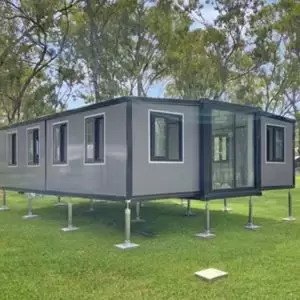


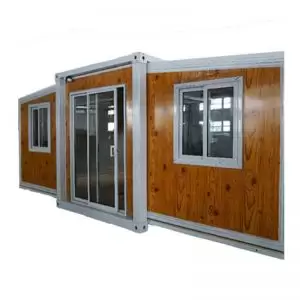


Custom Prefab Container Frame is usually selected by matching layout, dimensions, structural system, insulation, finishes, utilities, and delivery requirements with the final site and operating conditions. This helps buyers compare more than appearance and choose a configuration that fits use, transport, installation, and long-term operation.
For residential, commercial, industrial, hospitality, and temporary building projects, DINGRONG CONTAINER can help adjust dimensions, layout, structural system, insulation, finishes, and utility scope according to the project requirements. Similar searches include Prefab Frame Container, Prefab Container Frame, Steel Frame Container Homes Prefab, which helps compare adjacent modular building options.
Compare the available products above, then share layout, dimensions, insulation, finish, utility, quantity, and destination requirements so the quotation can match the actual project scope.
Share the intended application and confirm capacity, material, temperature range, lid fit, leak resistance, stackability, food contact, and carton packing.
Test with the real food or drink, service temperature, holding time, transport method, and matching lid.
Check capacity, rim and lid fit, leakage, deformation, nesting, cleanliness, and carton protection.
Compare the product cards by material, dimensions, construction, customization options, packing requirements, and suitability for the intended application before requesting a quotation.
Select your preferred language and currency. You can update the settings at any time.